
OCD & Contamination: Washing & Cleaning Compulsions/Rituals
OCD: Common Compulsions
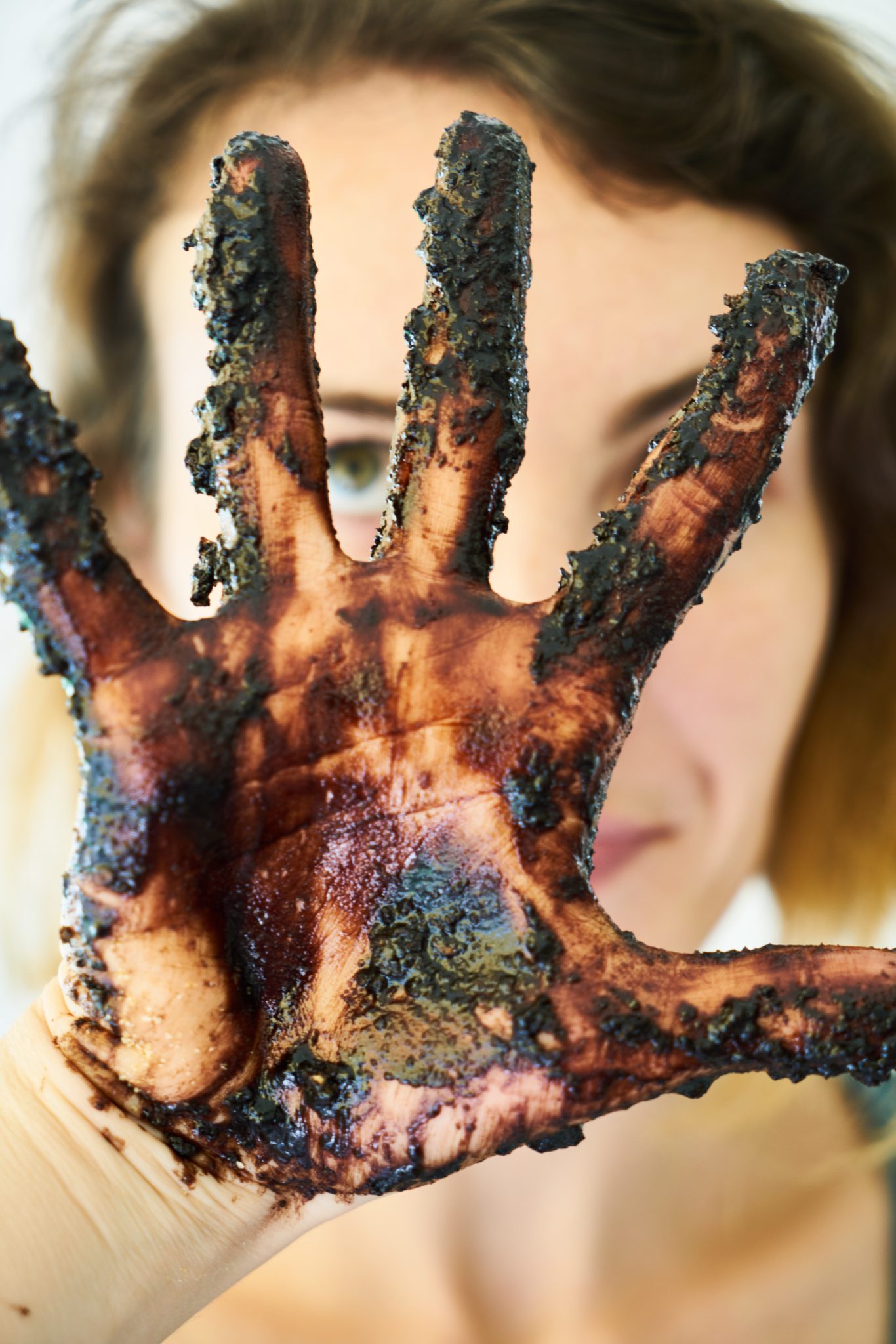
In health- or contamination-focused OCD, compulsions typically incorporate washing, cleaning, disinfecting, and sanitizing behaviors.
In my last post about OCD, I discussed reasons why people do rituals. This time, I’ll identify specific rituals that are common in obsessive-compulsive disorder (OCD) characterized by a fear of germs, contamination, diseases, and other health-related ills.
OCD: Hand-washing Rituals/Compulsions
Hand-washing is a very common ritual and typically involves prolonged and frequent hand-washing behaviors. These washing behaviors may involve a particular sequence, order, or rhythm. Some individuals count while washing or wash in multiples of particular numbers. If these washes are interrupted, the individual may feel the need to repeat the entire sequence to make sure that the wash has been performed “properly.” Although people with OCD may think that their washing rituals are primarily for hygienic reasons, the true function of washing rituals is to reduce feelings of distress, anxiety, doubt, and vulnerability.
The frequency and intensity of these washes and the use of abrasives or antibacterial soap often results in dry, reddened, or cracked skin. In some cases, washing causes bleeding, scarring, or other skin damage. Washing continues until the person feels less anxious about their particular OCD feared outcome.
OCD: Showering Rituals/Compulsions
Similarly, individuals with health-related OCD may take long, frequent showers. Showers are often taken using scalding hot water. If bathing, some individuals elect to literally boil their bath water in order to reach antiseptic temperatures. Showers may be taken routinely after certain events, such as after having a bowel movement. Others wash upon returning home in order to maintain a distinction between “clean zones” (the house) and “dirty zones” (the outside world).
Like the hand-washing behaviors described above, showering often follows a particular sequence or order. Shower routines frequently develop around the idea of not cross-contaminating body parts. In addition to following a specific sequence, individuals may wash certain body parts multiple times (e.g., genitals). Others will entirely avoid direct contact with certain body parts for fear of contamination (e.g., genitals, feet, anus). After showering the individual may exhibit rituals that involve drying body parts in a particular order. Others will allow their bodies to “drip dry” or “air dry” so that their bath towels don’t “spread contamination.” Some individuals dry their bodies excessively using hair dryers in order to remove residual moisture that they fear may be hospitable to the growth of germs or bacteria.
OCD shower rituals can be complex and time-consuming, and it’s critical to work on systematically dismantling these rituals to effectively treat contamination OCD. Therapy for OCD shower rituals sometimes involves home visits to get practice in the person’s actual environment. Other novel interventions include in-office shower based OCD exposures. My office was renovated recently and was specifically re-engineered for treating contamination OCD. One of the features that I was most excited to add was a therapeutic shower room for patients with contamination OCD. This room offers a private, sterile, therapeutic environment for challenging shower rituals. I’ve found that this treatment option has revolutionized how I provide therapy for contamination OCD, and it’s often a critical step in helping the person overcome their rituals. You can read more about this treatment by clicking on the shower picture below.

Have long showers because of contamination OCD? Use our ERP shower exposure room to shorten your shower times!
Obsessive-compulsive disorder (OCD) is a disease characterized by contradictions.
Elaborate rituals may be used when cleaning bathroom surfaces, like sinks, toilets, and shower stalls; in order to reduce perceived health risks. However, other individuals avoid cleaning entirely in order to minimize contact with germs, bacteria, mold, or mildew. This seeming paradox can be confusing for friends and family members who assume that all people with OCD clean excessively. This is not the case. Both over-cleaning and under-cleaning serve the function of avoiding potential danger. Messiness, dirtiness, or poor hygiene can reflect an extremely powerful avoidant process.
OCD: Toileting Rituals/Compulsions
Due to the fear of urine, feces, semen, or other bodily secretions, toileting behaviors can be especially distressing for individuals with health-related OCD. Individuals may use large amounts of toilet paper and will often wipe excessively, resulting in bleeding and skin abrasions. Because these behaviors may be repeated multiple times per day, it is often difficult for the skin in these areas to heal. Some individuals also make use of antiseptic cleansers that further damage or distress tissue. Other individuals make use of gloves or other skin barriers while toileting. In efforts to avoid inhaling feces or urine, some individuals hold their breaths or wear face masks while using the restroom, particularly when flushing the toilet. Others have emetophobia, also known as vomit phobia, and may go to great lengths to avoid illness and nausea.
Although unrelated to contamination fears, some individuals experience the sensation that they have not emptied their bladders or sphincters fully. They may strain or injure themselves in efforts to void completely. These types of symptoms may also be associated with the misuse of laxatives, fiber supplements, and diuretics. These symptoms typically do not reflect a fear of germs but rather may be signs of sensorimotor OCD.
Other common rituals & avoidance behaviors include:
- Wiping off hands frequently using paper towels, antibacterial wipes, or Kleenex.
- Excessive use of hand sanitizers containing rubbing alcohol or other antibacterial agents.
- Excessive use of disinfectants and cleansers.
- Using fresh bath towels and washcloths for every shower (not reusing).
- Cleaning the body with harsh chemicals.
- Compulsions involving ritualistic or excessive tooth brushing (brushing each tooth surface multiple times, reapplying tooth paste, spitting excessively while brushing, counting, and other rhythmic movements).
- Rituals involving shaving (shaving the same area of the skin many times, continually checking the skin for smoothness, reapplying shaving cream, using multiple razors, checking for shaving symmetry).
- Changing clothes upon entering/leaving the household. Asking other family members to participate in these rituals.
- Throwing away any clothing that gets stained or soiled without attempting to launder it.
- Laundering clothes using multiple through wash cycles.
- Not picking up items that have fallen on the ground.
- Wearing only shoes that have velcro fasteners (to avoid touching laces that have come in contact with the ground).
- Sanitizing dishes using multiple wash cycles.
- Boiling cooking utensils.
- Avoiding moving air (through air ducts), etc., that might transmit pathogens (mold, dust, germs).
- Not flushing the toilet.
- Not sitting on the toilet (sometimes even within one’s own home).
- Excessive use of Lysol and other cleansers on household objects.
- Over-cooking foods to kill pathogens.
- Avoiding “dangerous” foods like meats, poultry, or eggs.
- Exclusive use of paper towels rather than cloth towels.
- Using gloves, paper towels, or other skin barriers to avoid touching objects directly with bare skin.
- Avoiding physical contact with other people (hand-shaking, hugs, intimacy).
- Avoiding contact with children and animals.
- Using elbows, fingernails, or other indirect means to open doors or flip lightswitches.
- Holding one’s breath to avoid airborne contaminants.
- Avoiding people who mention or exhibit any symptoms of physical illness (coughing, sneezing, looking flushed, clearing throat).
- Avoiding sitting in public or having meals in public.
Collectively, these behaviors are intended to neutralize, avoid, or remove pathogens that might otherwise infect oneself or others.
OCD: Other Avoidance Behaviors
Individuals with contamination-related OCD often avoid contact with “dirty” objects or things that other people might have touched. These things include toilets, public restrooms, doorknobs, railings, or the ground. They may avoid busy public places, such as malls, subways, trains, buses, hospitals, doctor’s offices, schools, and daycare facilities.
The above reflects only a sampling of the possible compulsions related to dirt, germs, or other contaminants. Join me next time when I talk about health-related rituals that don’t involve cleaning, washing, or disinfecting.
Questions? Comments? What are your health-related rituals? Share below…
Related posts:
 OCD & Contamination: Reasons Why People Do Rituals/Compulsions
 OCD & Contamination Fears: Feared Outcomes (Example: HIV/AIDS)
 Contamination & Health-related OCD: Obsessions, Fears, & Worries
 Contamination OCD – Long Shower Exposures
 Pets & OCD: Contamination
 Reassurance Seeking in OCD
 OCD Triggers in Daily Life? Don’t Ritualize. Be Strategic! 3 Tips for Fighting OCD.
 Hit-and-Run OCD vs. Other Driving Fears
Want Updates about New Content?
Follow Me!
Follow @drstevenseay
35 Comments
Leave a Comment
Follow Me


Or Call (561) 444-8040
CPBS – South Florida (Palm Beach County)

Outpatient & Intensive Treatment Programs for Adults, Kids, & Teens
Upcoming Events
Get Email Alerts
Meet the Author

Dr. Steven Seay is a licensed psychologist in Florida & Missouri. He is the Director of the Center for Psychological & Behavioral Science and provides treatment & therapy throughout South Florida, including Palm Beach Gardens, Jupiter, West Palm Beach, Boca Raton, Boynton Beach, Fort Lauderdale, & Miami.
Read more...
I’ve learned a lot about rituals from this post…..actually I’ve expanded my knowledge about OCD from all of your posts……..thank you!
Thanks, Janet! I’m working on the next part now…hopefully, it will be up later today.
Hi Steven
Very very informative, it is a pitty we are not so up to date with OCD in South Africa as in the States
Thank you
Thanks for visiting! Here’s hoping we all take a moment today to help get the word out…be it through a blog post, a tweet, or a conversation.
Hi. This website was very helpful for me as I feel that i am a teenager who is obsessed with hand cleanliness. Do you have any ideas to help this issue.
I am always think that if I see anyone with lean body they have aids and start to fear about them and avoiding such people what’s my problem
Hi!
You could also write article about false memories and false feelings in OCD.
I have contamination OCD and also touching OCD, and sometimes I have very strong feeling, that I “touched” “contaminated” objects. I know, that I would not touch such things, but sometimes I only look at these objects and I at once have fake feelings. And sometimes these fake feelings are so strong, that I have to wash. These fake feelings is so strong as deja vu.
So If you could write article and explain, why and how such fake memories and fake feelings emerge, it would be good.
Thank you.
Thanks, Janis. I’ll definitely consider this. Your description sounds almost like an indirect form of emotional contamination. I talked a bit about emotional contamination here:
http://www.steveseay.com/ocd-starting-over-compulsions-undoing/
Regarding etiology, much of the neurobiology underlying OCD is related to dysregulation of neural circuits involved in “error detection”, “closure”, and “feelings of wrongness”. These circuits tend to be hypersensitive in OCD and often “misfire”…in essence, creating feelings of wrongness that stay persistently activated. Treatments like ERP help “re-calibrate” these systems.
OMgosh. I get these fake feelings, too and then wash. I am so glad to know I am not alone in this “craziness”.
Thank you very much for this very informative information!! I could help my friend with this showering OCD. When he’s visiting me, is there something I can do or suggest? I know this worries him a lot, but men and their EGO…what can I say?
Thank you!
-Grant
Grant,
Early in the recovery process, sometimes the best way to help is to simply provide basic information without getting overly involved. Regardless of what you say, be supportive and avoid putting pressure on him.
A close friend who suffers from this disorder and her routine involves many of the rituals you mentioned. She wants me to come to her house to visit for a week. She is a 6 hour plane ride away. If I go visit i will have to adhere to the rules and participate in the rituals. I’m not sure if I can or really want to. I’m afraid of her reactions if I don’t conform. I don’t feel comfortable going to see her. I’m not sure she has not told me the extent of her illness. Her husband was upset she invited me and felt it would be to much and that I would not want to be her friend again. I think for my own level of comfort I better maintain the friendship from a distance. Any thoughts?
Dear Dr. Seay,
This has been troubling me dreadfully and I am honestly embarrassed to post this, but I need clarification. Due to indecisiveness stemming from my OCD, I’ve developed the habit of turning on the shower faucet with the same hand I use to wipe feces off my rear after using the toilet. This did not bother me until I took a shower recently and I began to worry that every time I turn off the shower faucet and touch anything subsequently, I would feel a compulsion to wash anything I touch with soap and water. This has been interfering with my ability to focus in school and I feel like I need to replace my current laptop, reprint all my study notes, buy new textbooks because I feel as if my belongings have been contaminated with feces. I am also trying a stretching program to grow taller, and if I don’t get rid of those supposedly feces-contaminated belongings, the results of my progress when using that program will be negatively impacted. I also get some sort of slight headache when I think about this. What should I do? Thank you!
Hi Leslie, there are many effective exposure-based strategies for recovering from OCD. You could start by reading more about exposure and response prevention (ERP), a specific type of cognitive behavioral therapy that was designed to address symptoms of OCD. Recovery would likely involve resisting your washing rituals and challenging the thoughts that lead you to avoid and/or ritualize. There are many articles about ERP on this website, as well as on the website of the International Obsessive Compulsive Disorder Foundation. You should also know that OCD tends to make people feel excessively concerned about risks that other people wouldn’t really notice. Treatment involves learning to ignore these false alarms.
Hello Leslie,
I am having the same problem that you just described, I don’t feel comfortable with my keyboard, laptop, furnitures, I feel like throwing them away. I feel dirty after using them, it is like I am bathing myself in feces using them and that is making it very hard for me to concentrate.
This all started fully december 2013 and I still can’t get the thought of being contaminated out of my head. The thoughts can’t leave my head, causes me headache, deprives me of good sleep and sucks my energy.
Please if you have found a solution let me know, Thanks.
Hi,
I came across your post by googling obsessive use of lysol. This post describe exactly how my bf is. He doesn’t think it’s a big issue though. He refuse to seek help because he doesn’t think that anything is wrong with him. I really wanna help him see that its abnormal for him to be like this but how can i make him realize it?! Do you have any suggestion?
Mr. Seay
I just finished reading this and the more I research about ocd I get more convinced that I have it. What do I do? I’m driving myself crazy I seriously need help but I cannot afford it I’ve called Psychologists even psychiatrists but they are so expensive I cant even afford one visit. So what do you advice me to do? my situation is so bad that I take showers in isopropyl alcohol everyday then I cant breath because the smell is so strong I don’t have a normal life because of this I don’t do anything anymore because of this and I get horrible images all the time where I have to repeat myself or repeat the ritual oh my god its so exhausting I cry all the time because I throw everything away that I think is dirty or if it fell on the ground or touched something that is dirty to me. I know it sounds stupid but that’s what’s happening. I’ve been suffering with this for more than 3 yrs. I don’t know what to do to get rid of it..
Sounds bad. You can recover though. I’ve been there, and then some. Seek help (local therapist) or at least research self help CBT and ERP self-help on the internet.
Only suggestions, you do whatever feels right, but i suggest you talk to family and friends who you can trust most about it. Do not be alone in this. 🙂
Dear Dr Seay,
I’ve been leaving with an OCD father in law for 3 years. He has an obsession with tissue, paper towel, soap and water. He has three different kinds of tissue he uses for different cleaning and our water bills are twice the amount of a normal household and I see him wiping the floor with tissue everyday. He puts tissue paper or paper towel under all the plates in my kitchen. But ironically he doesn’t know how to clean. And thinks using tissue paper is the most cleanest method to clean. His room is in a mess. Things around the house keep on getting arrange as how he wants it to be. He doesn’t know that he has OCD. And my husband said that he has been like this ever since. I feel very sad looking at his situation and would like to know if treatment would help. Should we condone his behavior or convince him to go for treatment? I am trying to be patient but I think I am stressed up on having to live with this everyday.
I have a problem I have to scald my hands 6 times a day when I start to do it I think about the bathroom and the smell and feeling of my mothers bathroom it making me sick. I suffer from constant uti’s because I hold my urine until I really have to go. it starting to get in the way of my life please help
This is a great article and most of it describes me. Ocd is so complex that i can never explain it properly to friends. But this article does a brilliant job.
I have “contamination” OCD’s. I am afraid to touch my Piano, my digital piano, my synthesizers, my PC keyboard, my doorknobs. I think every object in my life has “battery acid” on it. Therefore, I have to shower and/or wash my hands many times before I can play my piano or get on my PC. In other words, if I got gas in my car, I would think “hmmm, I wonder if the last person who got gas, checked their oil? And if they did check their oil, maybe they got that battery post acid stuff on their hands or clothes, then touched the gas pump handle (the same one I am touching) So I would have to use a towel to avoid touching the gas pump, and when I get home I would have to shower for the fear of battery acid on me. In other words… no matter where I go, I always think I am going to get something nasty on my hands, then that will transfer onto my piano keys, my pc keyboard keys, my sheet music, my weigts, my car, my house door knobs.. etc.. The ironic thing is.. I know it is not logical, but I still have to go through the rituals.
I have OCD and that picture really upsets me. I want to know if it’s computer generated and I mentally scrape those bugs off of his finger.
Hello….
I think i suffer from OCD.
I have problems in using shower after a man used it, including my dad.
It is really annoying.
Is there any logic in it or i really have a problem?
Kind regards,
Stefana
I have really bad OCD. Im 17 from the UK. I pretty much have every single problem listed in this article. Its so horrible. But here is the weird part… i only feel compulsive to do my “rituals” when i am going to play my PS4.
I do a cleaning routine in a certain order here it is.
1. Clean my Bedroom Door with antibacterial wipes. I do this without any of my hand touching the door. If I or anyone else touches the door i must re-clean it.
2.Hoover my entire room walking backwards out of my room so i do not retread on the carpet. I do this making sure the hoover does not touch my cleaned door.
3.Spray my carpet with carpet fresh spray.
4.Close my door
5. Shower
6. Get dry
7.Get dressed
8. Wash my hands
9.dry hands on towel in my bedroom which is super clean.
10.Get on with gaming.
Your ps4 is your escape, your relaxation, so yet it represents a focal point in your “clean world” as opposed to the outside “dirty world”. Your mind is trying to protect the “clean world” and sees the ps4 as the pinnacle of it’s importance. Therapy will involve breaking down those barriers so there need not be “two different worlds”. Trust me I know a lot about this. I spent (do not become afraid please) 16 1/2 hours in the shower one night/morning in the longest ever session to seperate my “2 worlds” I’ve had enough; 25 years of very complex multi simultanious symptom OCD has been wearing my “forces” thin and I’m about to kisk its a$$. Please talk to family and friends that you can trust. What you have sounds like a first step,for OCD. Don’t let it get a foothold, ok?
kisk=kick :Typo fixed in the post above.
hi luke i read u r story my have problem.so how do get out tease thing.please help.
Talk to those trusted ones (family friends) about therapy, you’ll be glad you did. 🙂
I have really bad ocd I’m not scared of germs per say but physical contact, I take prisma (anti depressant) which helped but I feel every few months that it works less and less.
I shower every body part multiple times and use an excessive amount of soap, I wash everything on what I did that day, my room is my “clean zone” and I won’t let anyone in. if I feel extremely dirty I feel anxious and sometimes even angry. I can’t force my family to do the same since I’m only 12 I’ve had this problem since I was 10 which was so bad I had suicidal thoughts all the time. It got better but still extremely bad. I use 2 bottles of hand was a week sometimes more and 2/3 bottles body wash. For me school is the worst I feel “dirty” whenever I sit in the chairs and physical contact in very hard for me and the worst part is that I’m embarrassed to tell people and the friends that do know don’t exactly understand what it is. I feel like no one can truly understand unless they feel like I do. I have went to therapy but it didn’t help until my last one who prescribed me prisma. If anyone has any advice people comment.
Dear Dr. Seay, I have been battling OCD since I was 8 years old. For the past 3 years or longer, it has been the fear of fecal matter and being disgusting. Every time I use the restroom I take a shower, use baby wipes, and when at work, I try not to go at all. If I just washed a pair of pants and I have to use the bathroom at work, I have to wash them again because sometimes I accidentally get a little fecal matter on my pants and if I don’t wash them right away, I’m disgusting and people will think that. And of course, I have to go home so I feel I have it on the car seat. And I smell it everywhere. I’m to the point I don’t want to eat anything. Please if you can, I need suggestions. Thank you
Hello, I have a question which is about my ocd Battle. I have been battling ocd for 12yrs and the themes always change. So my new recent one is this, I use the restroom and after I’m done I pull up clothes then wash my hands, my thought is that I just touched my clothes before washing which now contaminated my clothes. I do my best to not have any part of my bare hand touch private area so they don’t get dirty but sometimes I feel a slight wetness meaning it touched my lady parts and that makes me feel uneasy pull up clothes because if that part of my clothes touches anything in the house, then that is contaminated with my lady parts and I have a little boy who puts everything in his mouth I feel disgusting and horrible because the though of my lady parts being in his mouth makes me cry. I try to see that this is irrational but I can’t seem to kick it. Any advice?
Hi Steven
my son 21 has OCD, he is on Paroxetine and works with a CBT therapist. His most serious obsession/compulsion is washing/cleaning. While he has the condition for quite some time this is relatively new and he says it originates from using public transportation. He claims that the CBT does not work for this particular obsession. A variety of events can trigger the need to wash/clean for example he says he was sitting in his car in a parking lot when a gross person came close and according to him was watching at him and then passed near the car. His anxiety was triggered by his concern that this person may touched the car. However, he says he does not/cannot recall if this actually happened, he claims that this part of the event is erased from his memory?
Is it common that OCD sufferers cannot recall the events that caused the anxiety?
Much thanks!
Edin
Yes, many people with OCD experience recurrent doubt about whether or not particular events have occurred. Some individuals experience uncertainty about other individuals’ behavior; some experience uncertainty about their own behavior. These types of concerns can be particularly problematic for people with contamination OCD who may then engage in cleaning rituals or avoidance in response to these thoughts. Unfortunately, the more the individual engages in mental review about the event (i.e., checking their memories about whether or not the event has actually occurred), the more confused they become. This can also contribute toward experiencing these types of events more and more often.
It’s great that your son is working with a CBT therapist to overcome his OCD. Just make sure that the therapist is using ERP and helping your son complete contamination exposures without needing to know whether or not these events have occurred. Exposures should not be conditional upon knowing whether or not the event has occurred; analysis is the mental ritual. He should embrace the idea that maybe the event occurred; maybe it didn’t. He doesn’t need to know for sure in order to complete the exposure.